
Some renders impress. And some renders sell. They are not the same thing. Discover the five elements that separate a technically perfect image from an image that closes deals, and why most are still optimising for the wrong prize.
Some renders impress. And some renders sell.
They are not the same thing.
Every day I see projects with technically flawless images, perfect light, realistic materials and textures that look like photographs, that go weeks without prompting a single decision. And I see others, simpler ones, that close deals at the first meeting.
The difference is not the software. It is not the rendering time. It is something much more fundamental: the intention behind the image.
A render is a communication tool. And like any communication tool, it only works when it has been designed for the right user, with the right message, at the right moment.
That is what we are going to talk about today.
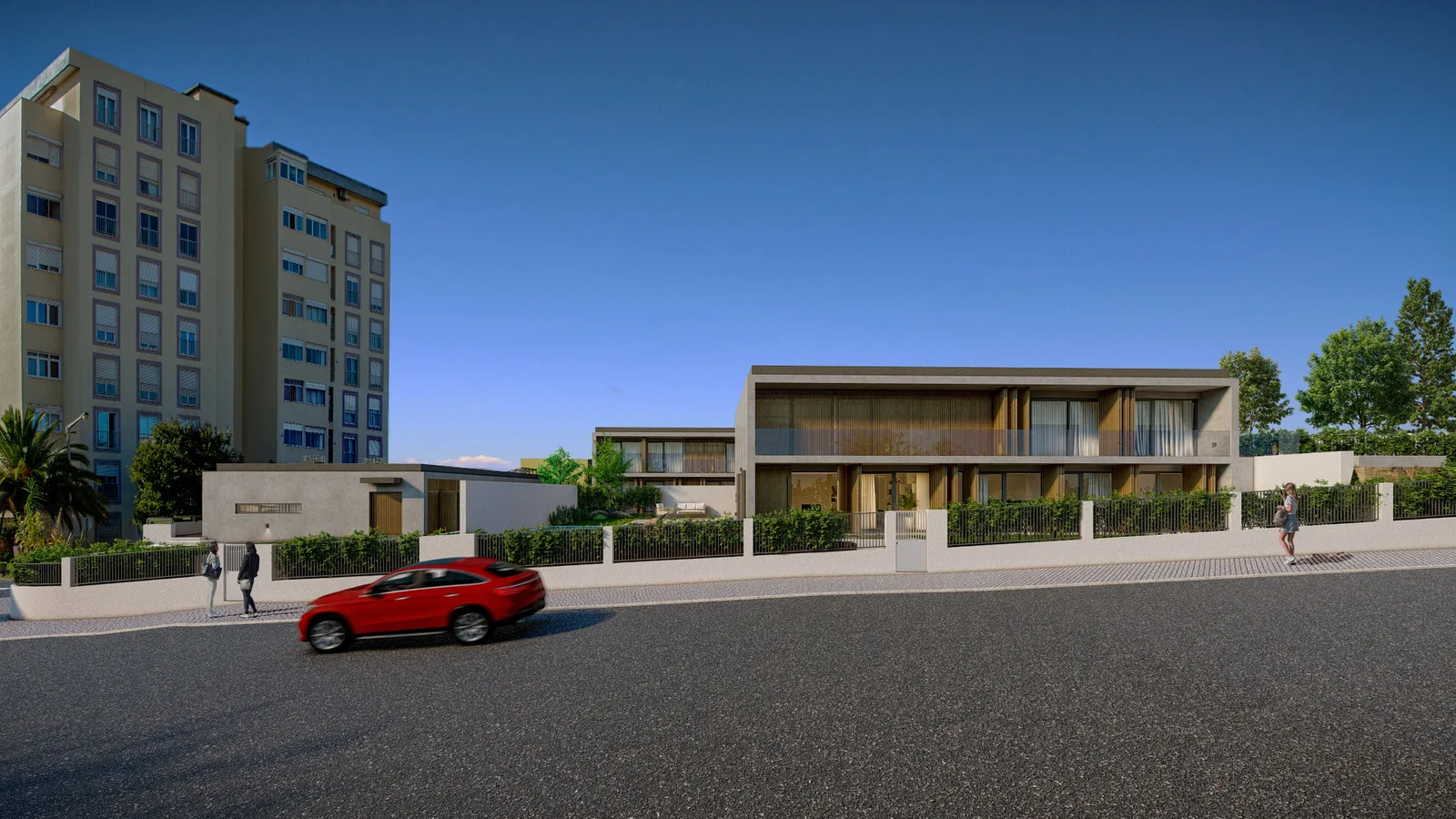
The basic mistake: confusing technique with strategy
The 3D visualisation sector has grown enormously in recent years. The technical standard has risen. Access to professional tools has been democratised. Today, any studio can produce high-quality images.
But there is a problem: most are optimising for the wrong prize.
They are creating 3D renders to impress other professionals: architects, designers, colleagues in the sector. Renders that win recognition in LinkedIn groups, get shared in portfolios and generate likes on social media.
What they are not doing is creating renders that move the people who decide: the buyer who needs to feel the space, the investor who needs to trust the project, the developer who needs to validate before going ahead.
These are completely different audiences. And they need completely different things.
What most 3D renders have (and why it is not enough)
Before talking about what is missing, it is important to recognise what most already do well:
High resolution and photographic realism. Today's renders look like photographs. That is a real achievement, and a necessary one. But it is only the entry point. It is the minimum expected, not the differentiator.
Detailed materials and finishes. Flooring, stone, wood, glass, all well represented. Excellent for validating technical choices with the design team.
“Architect's” viewpoints. Wide angles, specific focal lengths, framings that show the space as a whole. Perfect for people who read plans and live in projects. Less effective for someone who has never bought a home and needs to imagine themselves living there.
The problem is not what is there. It is what is missing.
What a render needs in order to sell
1. A story of life, not a technical demonstration
Human beings do not buy spaces. They buy better versions of their lives.
A render that sells does not just show a living room. It shows a Sunday morning, light coming through the window, a cup of coffee on the table, the feeling of being at home. It does not show a balcony. It shows two people having dinner at sunset.
This is not decoration. It is sales psychology applied to 3D.
When we add human figures to scale, everyday objects and details of real life (books on a table, a plant by the window, a rucksack leaning against the sofa), we are giving the buyer an emotional anchor. Something concrete to hold on to.
What most show: uninhabited, sterile renders that show a perfect space empty of humanity. They are beautiful. They do not convince.
2. The right angle for the right decision
Some renders are made for the architect, who wants to see the relationship between spaces, the proportion of the volumes, the coherence of the design.
And some renders are made for the buyer, who wants to know whether their dining table will fit, whether the kitchen gets enough light, whether the children's bedrooms have room to play.
These are different angles. Different camera heights. Different focal lengths.
A render taken at a height of 1.60m, with a focal length close to human vision (35–50mm equivalent), places the viewer inside the space. It creates immersion. It reduces the cognitive effort of “imagining what it will be like”, because it already feels as if you are there.
What most show: camera angles that are too high, or focal lengths that are too short, distorting the space and creating impossible perspectives. They look great on an office wall. They do not help anyone decide.
3. Real context: the project in the world, not in a vacuum
A building without a street. A house without a garden. An apartment without a view.
This is one of the most common, and most expensive, mistakes in property visualisation.
Context is not an extra. It is part of the product. When a buyer acquires an apartment, they are not just buying the 100m² of interior. They are buying a location, a neighbourhood, a relationship with the outside.
A render that includes the surrounding context, the street, the trees, the nearby buildings, the relationship with public space, answers questions the buyer does not even know they are asking. And it removes objections before they are raised.
What most show: generic or completely artificial backgrounds that disconnect the project from reality. The buyer feels they are looking at a model, not a home.
4. Clear visual hierarchy: the eye has to know where to go
A good render has a focal point. An intention. Something the eye finds first and from which it explores the rest.
When everything is highlighted, nothing is highlighted. And the brain, overloaded with information, switches off, or asks for more time to think. Which is exactly what we do not want.
The visual hierarchy of an effective render works like that of a good advert: there is one main element that creates immediate impact, secondary elements that support the narrative, and details that reward those who look closely.
What most show: over-balanced compositions where everything has the same visual weight and nothing stands out. Technically correct. Strategically neutral.
5. Consistency with what will be delivered
This point is often overlooked, and it is one of the most important for building trust over the long term.
A render that shows finishes that will never exist, light that only happens on perfect days, or proportions slightly different from the real ones, creates an expectation that reality will not meet.
And a buyer who feels cheated does not come back. And tells their friends.
The most effective render is the one that sells honestly, showing the space at its real best, not in an idealised version that exists only in pixels.
What most get wrong: transparency about what is real and what is aspirational. The line between “showing the best angle” and “misleading the buyer” is finer than it looks.
The question that changes everything
Before approving a render, whether as a client or as a professional, there is one simple question that sums it all up:
“Does this image help the person who has to decide to decide faster?”
Not “is it beautiful?”. Not “does it impress?”. Not “will it win awards?”.
Will it help someone say yes, or no, with more confidence and in less time?
If the answer is yes, the render is doing its job.
If the answer is “maybe”, or “I don't know”, something is missing.
The render as an investment, not a cost
Some people still see 3D visualisation as a production line item, a necessary cost to be kept to a minimum.
The most competitive professionals already think differently.
A well-made render reduces the number of meetings needed to close a deal.
It speeds up planning approvals. It validates layouts before a single euro is spent on site.
It enables pre-marketing sales that finance construction.
The cost of a professional render is easy to calculate. The cost of a postponed decision, or of a sale lost through lack of clarity, is much harder to quantify. And much bigger.
Conclusion
A technically perfect render that does not sell is a failed render.
Not because the technique is bad. But because technique alone was never enough.
What makes a render sell is the combination of realism with intention, of detail with focus, of technical perfection with strategic intelligence.
It is knowing that there is a person on the other side, with doubts, with fears, with a difficult decision to make, and creating an image that helps them move forward.
That is what separates a good render from a render that closes deals.
👉 Working on a project and want to see how 3D visualisation can speed up your sales? Talk to us.
Foreseen Projects (formerly Hugo Guerra Design) is a studio specialising in architectural and real estate 3D visualisation, a strategic partner to architects, developers, builders and interior designers in Portugal.