
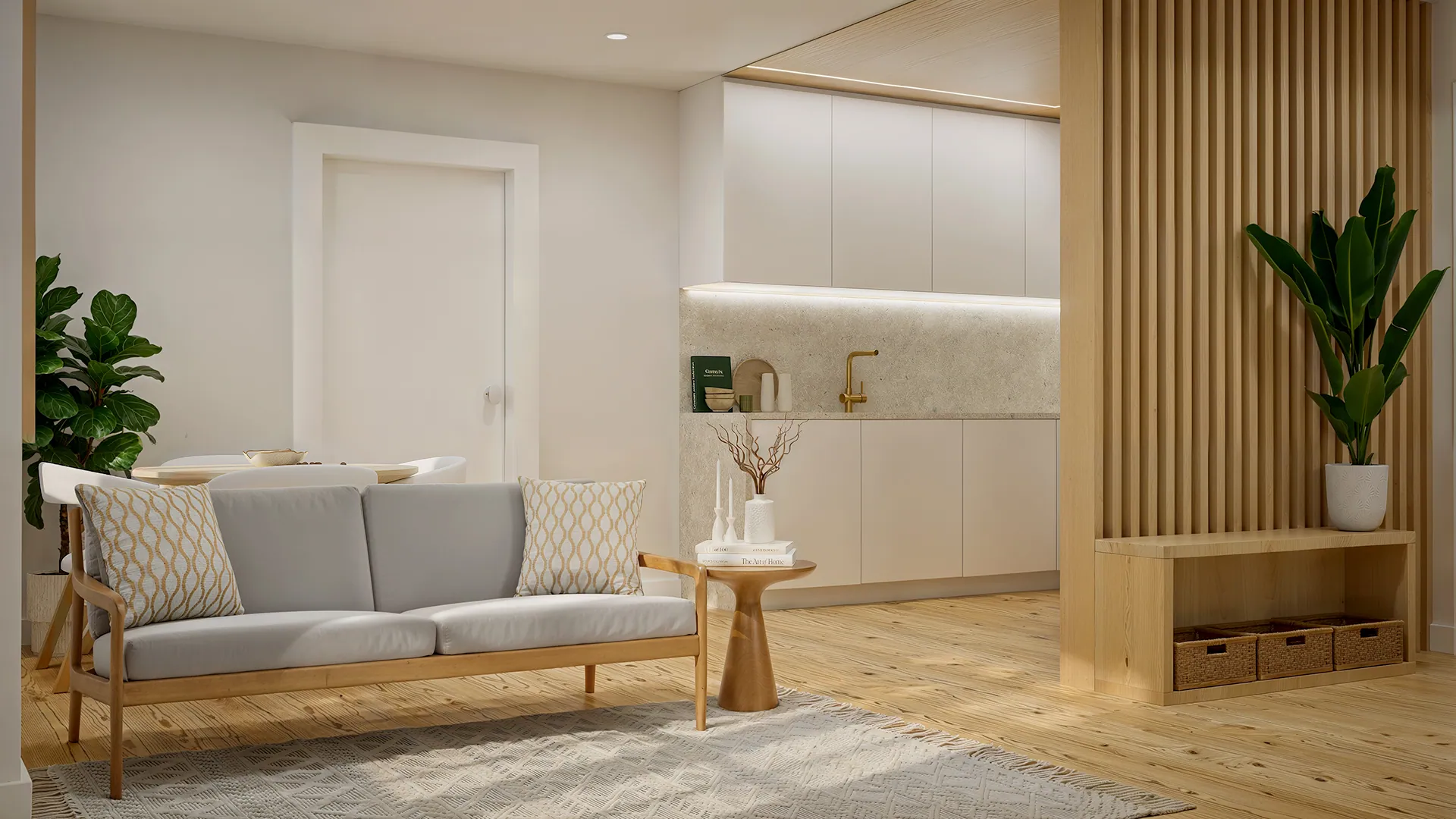
Cutting the price looks like the obvious answer when the market slows. It is rarely the smartest one. Discover the five real estate differentiation strategies top developers use to hold, and sometimes raise, the value of their projects when the competition retreats.
There is a moment in every property cycle that separates the developers who build businesses from those who merely survive markets.
It is the moment the competition starts cutting prices.
And inevitably, someone in the room, at a board meeting, a sales meeting or a conversation with the agents, says the most dangerous sentence in real estate:
“Maybe we should review the prices.”
It is a sentence that sounds reasonable. That sounds responsible. That seems the obvious answer when the market slows and viewings drop.
But it is almost always wrong. This article explains why, and what to do instead.
The price war trap
When a developer cuts the price, they are making a public statement.
They are telling the market: “My project is not worth enough to justify the price I asked.”
That may not be the intention. But it is the message that gets through. To the buyers already negotiating, who immediately ask for a bigger discount. To those who were undecided, who now wait to see whether it falls further. And to those who did not even know the project, who arrive drawn by the price, not by the value.
A price war has a perverse logic: it always starts with whoever has least to lose, or least awareness of what they are losing. And it drags everyone down.
The developer who enters that war rarely wins. Even when they sell.
Because selling with a destroyed margin, a compromised position and buyers attracted solely by price is not a result. It is a defeat with a signed contract.
What is really happening when sales slow down
Before touching the price, there is a more important question to ask:
Why are the people who visit the project not buying?
In most cases, the answer is not the price. It is one of these three things:
They do not see the value. The project has quality, but that quality is not being communicated in a way the buyer can feel. The images do not convey what the finishes promise. The visit to the sales suite does not create desire. The conversation with the consultant focuses on square metres, not lifestyle.
They do not trust it enough. Buying off-plan demands a high level of trust. If the marketing material is generic, if the images are not convincing, if the digital presence is weak, the buyer hesitates. Not because the price is high. Because the risk looks high.
There is no urgency. If there is no reason to decide today, the decision is left for tomorrow. And tomorrow rarely comes. Without positive pressure (real scarcity, a deadline for special terms, visible sales momentum), the buyer stays on indefinite hold.
None of these problems is solved by cutting the price. Solving any one of them is more effective, and more profitable, than giving up margin.
The five differentiation strategies that work
1. Make the value visible, before the price is discussed
The value of a property project is rarely obvious. It has to be shown, explained and felt before the buyer even asks the price.
That means investing in the quality of the experience of discovering the project: the images that appear on social media, the landing page, the sales support materials, the visit to the sales suite.
Each of these touchpoints is an opportunity to build perceived value, or to waste it.
A project with 3D renders that show the real finishes in all their richness (the natural stone, the wood, the light) creates a perception of value that comes before the price and supports it. The buyer who reaches the sales conversation after seeing those images does not ask “why so expensive?”. They ask “is anything still available?”
The difference is not in the project. It is in how the project was presented.
2. Own the narrative, and do not let the market write it for you
When you do not tell your project's story, someone else tells it for you. And it is rarely the story you want told.
A development's narrative has to be built actively, with consistent content, a clear voice and a regular presence on the channels where your buyer is.
It is not about posting more. It is about posting with intent.
A post that shows the detail of the premium window frames and explains why they were chosen (thermal performance, looks, durability) is worth more than ten generic posts about “build quality”.
A video that shows construction progress and introduces the lead architect builds more trust than any technical certification.
A newsletter that tells the story of the neighbourhood the development sits in, its history, its transformation, its future, sells far more than a list of the apartment's features.
The narrative is what turns a property into a life project. And life projects do not get dragged into price wars.
3. Create sales experiences the competition cannot replicate
When the market slows, most developers cut marketing. Those who stand out do the opposite: they invest in the buying experience while the competition retreats.
What that means in practice:
A sales suite that is itself a demonstration of the product. Real finishes, tactile materials, considered lighting, not a table with plans and brochures.
An immersive virtual tour that lets the buyer explore the apartment before the slab has been poured. That removes physical distance and the barrier of imagination.
A personalised follow-up process, not an automated CRM sending generic emails, but an experience in which the buyer feels that their profile, their needs and their specific questions have been heard and answered.
Exclusive events for qualified prospects, a site visit, a project presentation dinner, a conversation with the architect, which create a sense of community and belonging before the purchase.
None of these experiences is expensive compared with the discount you would otherwise be giving. And none of them compromises the margin.
4. Segment your communication and speak directly to the people who decide
A development rarely has a single type of buyer. It has several, with completely different motivations, fears and decision criteria.
The investor buying to let thinks about yield, liquidity and risk. Not about whether the kitchen gets enough light in the late afternoon.
The couple buying to live there think about their children's school, commuting time and whether the bedrooms have room to play. Not about rates of return.
The international buyer thinks about legal certainty, ease of managing from a distance and the developer's reputation. Not the same things as the local buyer.
When the project's communication is generic, when it tries to speak to everyone at once, it speaks to nobody with enough depth to create conviction.
Differentiation starts here: in knowing your buyer better than they know themselves. And in creating communication materials that speak directly to their decision criteria, not to your production criteria.
5. Position the price as a consequence, not a starting point
This is perhaps the deepest change, and the hardest to implement when there is sales pressure.
The price of a property should not be the first sales argument. It should be the inevitable conclusion once the value has been fully demonstrated.
When a buyer reaches the price conversation after seeing renders that moved them, taking a virtual tour that put them inside the apartment, hearing the story of the project and the architect, and understanding the location and its potential for growth in value, the price is just a confirmation.
When they reach the price without having been through any of those experiences, it is a shock. And shocks create resistance.
The question is not what you charge. It is the order in which things happen.
What the projects that do not cut prices have in common
Looking at the developments that hold, and sometimes raise, their prices during tougher market periods, there is a consistent pattern:
They invested early in quality communication. The images are exceptional. The sales materials are premium. The digital presence is consistent and well looked after.
They built a strong narrative. The project has a story, a concept, a clear angle of differentiation, communicated consistently across every channel.
They created demand before opening sales. They arrived at the launch with a list of qualified prospects, which made the opening a moment of positive momentum instead of silence.
They treated buyers as partners, not transactions. The sales process is an experience, not an administrative procedure.
And above all: they never let price be the only argument. Because when price is the only argument, any competitor with less margin to protect wins.
The question to ask before touching the price
When the pressure comes, and it will, there is one question you should ask before any other:
“Have we done everything we could to make the value of the project obvious and undeniable?”
If the answer is no, and in most cases it is no, then the solution is not in the price. It is in the communication.
A render that did not exist. A campaign that was never run. A virtual tour that was never produced. A launch event cancelled for lack of budget.
Each of these decisions has a cost that rarely shows up in any analysis, but that is felt in every viewing that does not convert and every buyer who is “going to think about it”.
Conclusion
Cutting the price is the easiest response when sales slow.
It is not the smartest. And it is almost never the most effective.
The projects that end up sold out in difficult markets do not get there by having the lowest price. They get there by having the clearest value, the strongest communication and the most convincing buying experience.
That is the difference the market recognises, and that the competition can hardly copy overnight.
When everyone is cutting prices, the best response is to raise your game.
👉 Have a project that needs to stand out in a competitive market? Talk to us: the first conversation is free and could change the way you present your development.
Foreseen Projects (formerly Hugo Guerra Design) is a studio specialising in architectural and real estate 3D visualisation, a strategic partner to architects, developers, builders and interior designers in Portugal.